Tower Rush 💸 REALLY Win Money While Playing
Tower Rush Tower Building Game - Bonus & Real Cash Play
This page focuses on two things: the bonus system that shapes your sessions, and what real-money play actually looks like once the demo training wheels come off. If you’ve already grasped the basics and want to understand the financial side of Tower Rush, you’re in the right place.
The Building Mechanic — Why It Matters for Real Cash
Every crash game asks the same fundamental question: when do you stop? Tower Rush reframes that question by tying your exit point to a physical action you perform.
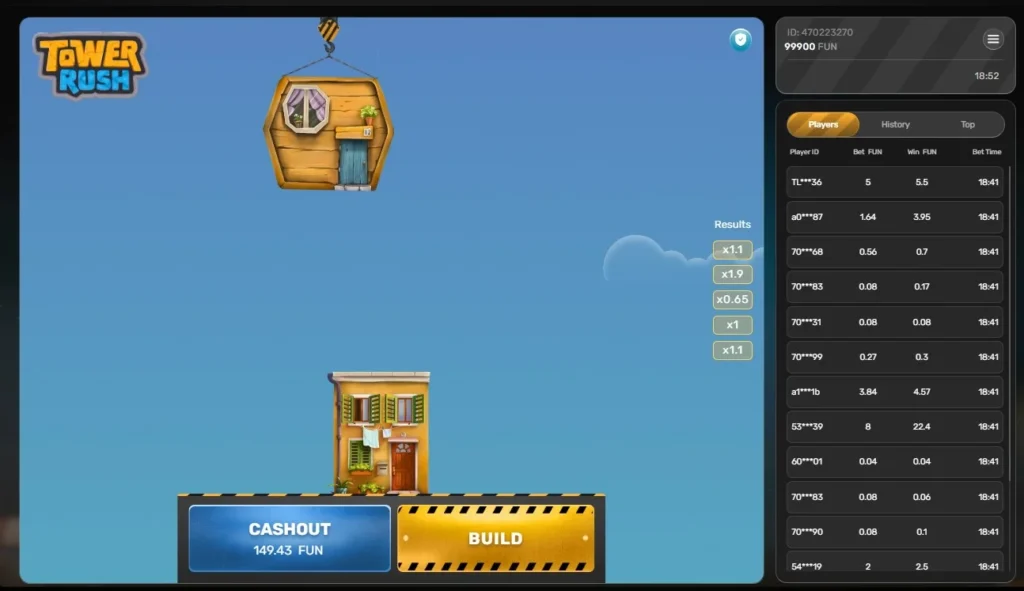
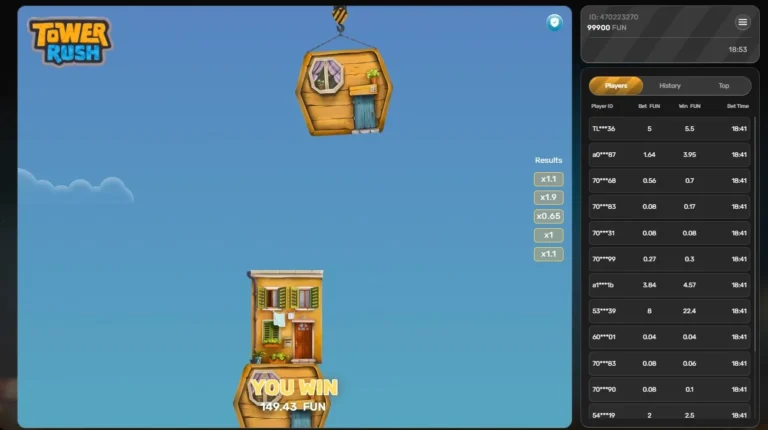
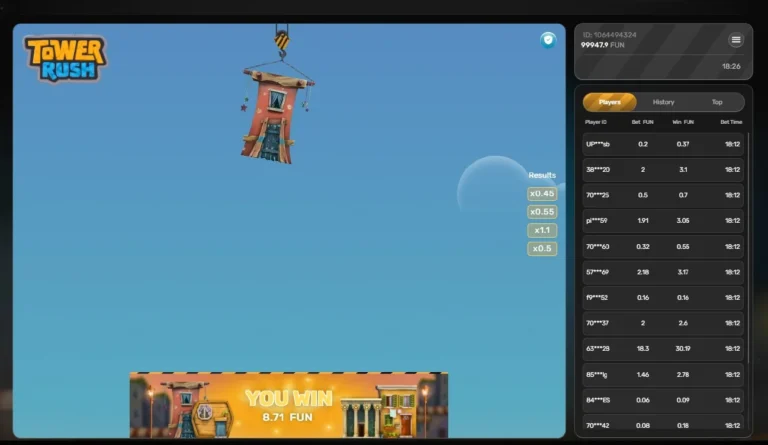
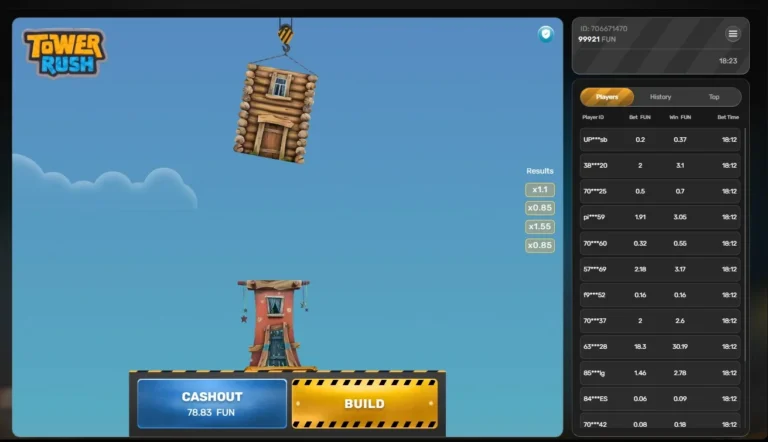
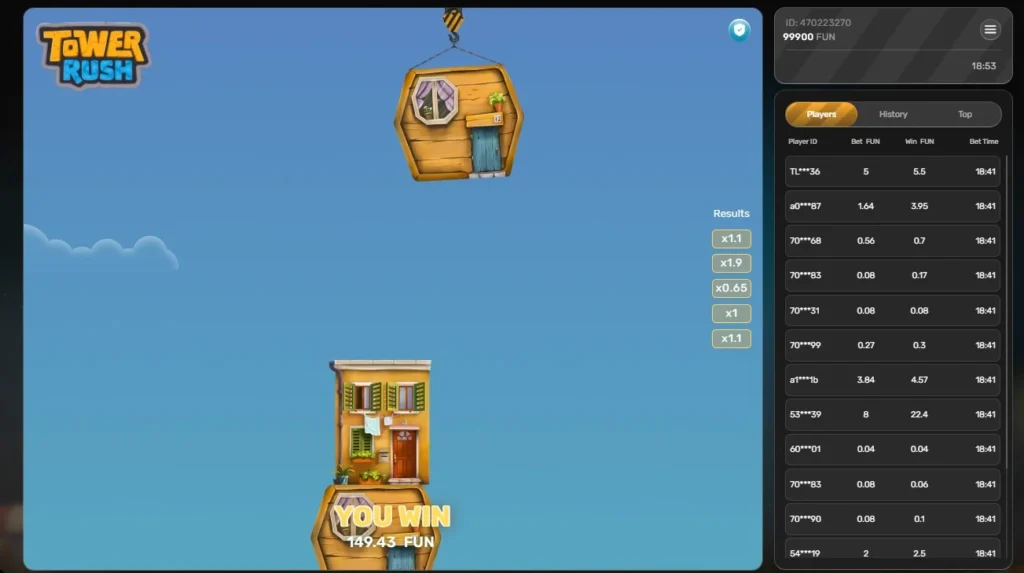
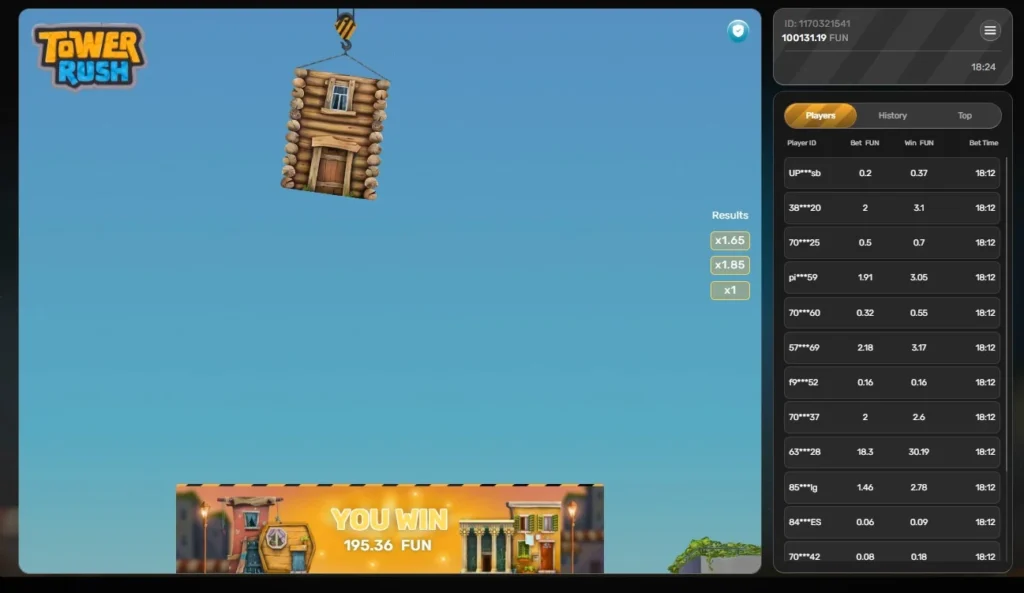
A crane swings a block. You release it. If it lands, the tower grows and your multiplier climbs. If it misses, the tower collapses and your stake disappears. Between each successful placement, you decide: secure what you’ve built, or add another floor.
With real money on the line, this physical loop creates a different relationship with risk than passive crash games. You’re not watching a curve and clicking a button. You’re constructing something — floor by floor, decision by decision. Each block you place carries the weight of every block beneath it. Cash out at x9 after seven clean placements and it feels earned, because it was.
That sense of ownership cuts both ways. When a tower collapses at floor eight because your timing slipped by a fraction, the sting is sharper than watching a curve crash in Aviator. You built that tower. You missed that placement. The feedback is immediate and personal.
For real-cash players, this means two things. First, Tower Rush demands more focus per round than most alternatives. You can’t half-watch it while doing something else. Second, the satisfaction of a well-timed cashout is proportionally greater. It’s your skill that got you there — at least partially. The RNG determines block physics, but your hands and your discipline determine the outcome.
Bonus Floors — How They Reshape a Cash Session
Three bonus mechanics appear during gameplay. Each one triggers at most once per session, and all three function identically in demo and real-money modes. But their impact on real-cash sessions is disproportionately larger, because the money they help you secure — or the risk they help you avoid — is tangible.
Frozen Floor: The Round Saver
Frozen Floor locks your current multiplier as a guaranteed payout. Everything above that point becomes pure upside.
In demo mode, this is interesting. In real-money mode, it’s transformative.
Picture a round where you’ve reached x6 on a 3bet—18 in potential return. Frozen Floor activates. That 18 is now guaranteed regardless of what happens next. You can attempt five more floors with the certainty that the worst outcome is still 18 is now guaranteed regardless of what happens next. You can attempt five more floors with the certainty that the worst outcome is still 18 in your pocket. The psychological shift is enormous. Your hands relax. Your timing improves. You make better placements because the pressure has evaporated.
During one real-money session last month, Frozen Floor triggered at x4.8 on a 2 bet. I pushed all the way to floor thirteen—something I would never attempt without protection—and cashed out at x24.1. That′s 2 bet. I pushed all the way to floor thirteen — something I would never attempt without protection — and cashed out at x24.1. That’s 48.20 from a 2stake, with a guaranteed floor of 2 stake, with a guaranteed floor of 2 stake, with a guaranteed floor of 9.60. Without the bonus, I’d have cashed out around x7 or x8.
Temple Floor: The Random Boost
Temple Floor pauses the building sequence and spins a wheel with multiplier segments. Values range from x1.5 to x3, with an occasional freeze option. Whatever the wheel lands on gets added to your current multiplier.
The impact varies wildly. A x1.5 boost at floor three (maybe pushing you from x2.5 to x3.75) feels negligible. A x3 hit at floor seven (jumping from x11 to x33 territory) can define an entire session.
You can’t control Temple Floor or predict its outcome. What you can control is your response. If the boost is modest, continue playing as planned. If the boost is significant — pushing your multiplier well beyond your original cashout target — seriously consider securing the windfall rather than gambling it away on additional floors.
Triple Build: Free Growth, Zero Risk
Three blocks place themselves automatically. Perfect alignment. No timing pressure, no possibility of failure. Three guaranteed floors of multiplier advancement.
Triple Build is the bonus that makes you lean back in your chair and just watch. The tower grows, the multiplier climbs, and your stress level drops to zero for a few seconds. When the automatic sequence finishes, you’re sitting on a higher multiplier than you planned for — and you didn’t risk anything to get there.
The strategic question after Triple Build: take the gift or keep pushing? My default is to take it. If Triple Build moved me from x5 to x11, that’s already beyond what I typically target in a clean run. Cashing out locks a bonus-enhanced result. Continuing adds risk from a position that was already above expectations.
Real Cash Play — What the First Month Looks Like
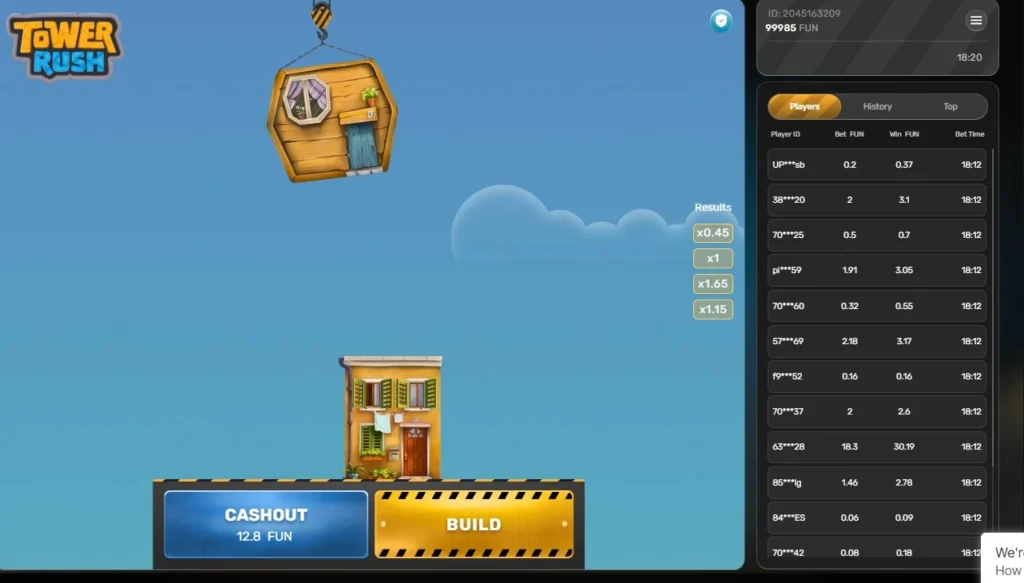
I deposited 30 on a licensed platform in late December. Betsize:30 on a licensed platform in late December. Betsize: 0.50 to $1.50 per round, depending on confidence level and remaining balance. Here’s an honest account of what happened over the following weeks.
Week one was messy. My demo skills transferred imperfectly — placements that felt easy with virtual credits suddenly felt pressured with real money. I caught myself cashing out too early (x3, x4) out of fear, then overcorrecting and pushing too far. Net result after week one: down about $6. Not dramatic, but a clear sign that real-money play requires recalibration.
Week two stabilised. I committed to a fixed x7 cashout target and forced myself to honour it every round. No exceptions. The consistency helped. Some rounds collapsed before reaching x7 — that’s variance — but the ones that hit compensated well. Net result: recovered the 6 and added 3.
Week three is when bonuses started making a noticeable difference. A Frozen Floor session produced my best single round — x19.8 on a 1bet. Triple Build appeared three times across the week, each time adding meaningful multiplier growth without any risk. Net result: up another 1 bet.
Week four included my worst single session. Four consecutive collapses at floors two and three, followed by two at floor five. Seven minutes, 5.50 gone.
I closed the browser and cameback the next day. That decision—walking away when variance turned hostile—probably saved me 10–$15 in emotional chasing.
After one month: starting balance 30, ending balance 38.40. A 28% gain. Not retirement money. Not even dinner money, really. But a positive trajectory built on discipline, small bets, and patience.
Choosing a Platform for Real-Money Tower Rush
Not all casinos running Tower Rush offer the same experience. A few factors worth evaluating before you deposit:
RTP configuration. Ask or check whether the casino runs Tower Rush at 96.12% or 97%. That gap matters across hundreds of rounds. Some platforms publish the exact RTP in their game information panel. Others require you to check the help or rules section within the game itself.
Bonus eligibility. Confirm that Tower Rush counts toward wagering requirements if you plan to activate a welcome bonus. Crash games are sometimes excluded or weighted at less than 100%.
Withdrawal speed. A casino that takes five days to process withdrawals creates a friction that subtly encourages you to keep the money in play rather than cashing out. Platforms with same-day e-wallet or crypto withdrawals remove that temptation.
Licence verification. Malta Gaming Authority, Curacao eGaming, and Gibraltar Gambling Commission are the most common licences you’ll encounter. Check the casino’s footer — licence numbers should be displayed and verifiable on the regulator’s website.
Mobile experience. If you plan to play on your phone, test the casino’s mobile interface before depositing. Some platforms run Tower Rush smoothly on mobile. Others introduce lag or interface quirks that affect gameplay.
Managing Your Cash — Practical Bankroll Rules
Real-money Tower Rush runs on high volatility. Rounds end in collapse more often than they end in cashout, especially if you’re targeting multipliers above x6. Your bankroll strategy must account for this.
The 2% rule. Never bet more than 2% of your current balance on a single round. With
50,that′s50, that’s 50,that s1 maximum. This number feels small. It’s meant to. Survival beats spectacle.
Session budgets. Divide your total bankroll into session-sized chunks. If you have
60,considerthreesessionsof60, consider three sessions of
60,considerthreesessionsof20 each. When a session budget runs out, stop. No dipping into the next session’s allocation.
Profit targets. Decide in advance what a “good session” looks like. Maybe it’s a 20% gain on your session budget. Maybe it’s ten consecutive rounds of disciplined play regardless of outcome. Having a target prevents the goalpost-shifting that extends sessions beyond their useful life.
Loss limits. Equally important. If you’re down 30% of a session budget, consider stopping. The temptation to “win it back” intensifies as losses mount, and the decisions you make under that pressure are almost universally worse than the ones you make when calm.
One thing I’ve noticed: the players who struggle most with Tower Rush aren’t the ones with poor timing skills. They’re the ones with poor spending discipline. A mediocre player with strict bankroll rules will outlast a precise player who bets 10% per round. Every single time.
What Real-Cash Players Report
When Tower Rush Isn't the Right Fit
Transparency requires acknowledging that this game won’t suit everyone.
If you prefer fully passive games where you place a bet and watch the result unfold, Tower Rush will feel exhausting. Every round demands active input and focused attention. There’s no “lean back and hope” mode.
If your primary goal is chasing massive single-round payouts, the $10,000 / 100x win cap limits your upside. Players with large bankrolls targeting six-figure wins need a different game.
If mobile is your only option and you lack patience for the precision challenges on smaller screens, frustration may outweigh enjoyment past the early floors. Desktop remains the superior experience for high-floor attempts.
And if you struggle with impulsive spending or have a history of gambling-related problems, the rapid round pace of Tower Rush — five to forty seconds per round — can accelerate losses faster than slower-paced games. Responsible gaming tools and self-exclusion options exist for a reason. Use them proactively, not reactively.
Keeping Sessions Healthy
Short sessions outperform long ones. Fifteen to twenty-five minutes is the productive window for most players. Past that, fatigue creeps in — you start missing placements you’d normally land, and your cashout discipline erodes.
Set a timer on your phone. When it goes off, finish the current round and close the game. No “just one more.” That phrase has emptied more bankrolls than any string of bad luck ever could.
Use the casino’s built-in limits. Deposit caps, session timers, loss alerts — activate them during registration when your thinking is clear, not during a session when your judgement might be compromised.
And keep perspective. Tower Rush is entertainment. The money you deposit should be money you’ve already decided to spend on fun. If it comes back with a profit, wonderful. If it doesn’t, you had a good time building towers. That’s the only sustainable mindset for real-cash play.
Rating — 4.2/5
Tower Rush earns 4.2/5 as a real-money crash game. The building mechanic creates genuine engagement. The bonus system — particularly Frozen Floor — adds strategic depth that most competitors lack. The RTP is competitive, and the Provably Fair option on select platforms provides verifiable trust.
Where it loses points: bonus appearance frequency could be more generous, the win ceiling limits high-rollers, and mobile precision at advanced floors remains a real constraint.
For players who value active gameplay, strategic decision-making, and transparent odds, Tower Rush stands out clearly in a crowded field.
FAQ
0.01 per round. Most players settle between 0.50 and $5.00 depending on their bankroll size.
No. The frequency and mechanics are identical across both modes. The RNG engine doesn't differentiate between virtual and real credits.
E-wallets and crypto typically process within hours. Card withdrawals take two to five business days. First-time withdrawals require KYC verification, which can add 24–48 hours.
Some casino implementations include auto-cashout at a preset multiplier. Others require manual action. Check the game interface on your chosen platform.
Technically possible if you have accounts on different platforms, but not recommended. Splitting focus between two active rounds undermines the precision that makes Tower Rush rewarding.
Start small. 10–20 is enough to give you dozens of rounds at low bet sizes while you adjust to the psychological shift from demo play.

Charlotte Jackson
iGaming Content Strategist & Technical Analyst


